Would students feel and perform better in school if grades were abolished?
By ANNA WHITLOCKS GYMNASIUM
Published 2026-06-01 13:19

Would students perform better in school if the grading system were abolished? Many people think differently and many studies have been done on the grading system. Should we abolish the grading system?
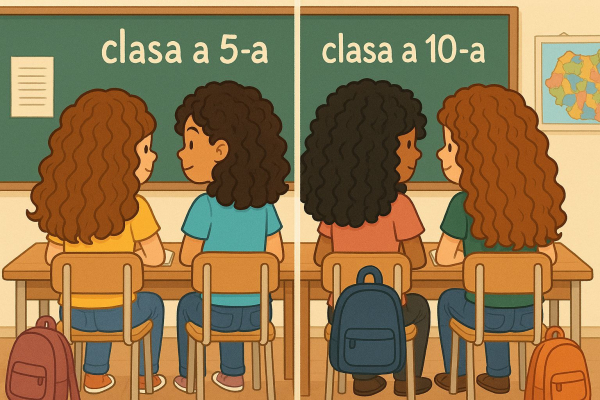
I interviewed two girls, Nora (12) and Edith (13) in 6th grade. They received grades this year for the first time.
Did you enjoy school more in 5th grade?
- Yes they put less pressure on us to perform. We learned more because it was fun and to make the knowledge stick, Edith says.
Do you study only to get good results on tests?
- Of course! We study to get good grades not to learn. We have to force the knowledge into the brain and after the test you immediately forget everything, Nora describes.
Do you think students would associate tests with anxiety if the grades were abolished?
- No! We would see it as a opportunity to show the teacher our true capabilities.
What would be better with school if there were no grades?
I think school would be less about competing and more about learning. Fewer teenagers would have anxiety for not performing at the highest level, explains Nora.
I think fewer students would suffer from mental illness related to the pressure that is put on us, fewer students would give up if they get disappointed because they don't feel like anything makes progress in their work. That would lead to a larger number of students actually listening to the teachers' briefings in the lessons, they say.
But how do the grades affect the students´ learning? In the article "Forskare: Betyg inte viktiga för elevernas kunskaper" published on January 28, 2015, on "Sveriges Radio", Kristian Lundahl (professor of pedagogy at Örebro University) is interviewed. He explains the effects of grades in elementary school. Lundahl describes that students perform better in school when demands for high grades are made, such as when it is time to apply for gymnasium (high school). On the other hand, their mental well-being is negatively affected, with reduced self-esteem, sense of life, etcetera.
He also says that grades are not that important for students´ learning. A student who has only just passed an exam has on average learned as much as a student who performed at a very high level on the same exam. However, he says that grades have a negative effect on low achieving students.
How is the student´s mental health? In the article "Betyg i skolan ger ökad stress och ohälsa" published on "forskning.se" 2 September 2021, you can read about how grades lead to mental illness. In 2011, the new curriculum (LGR 11) was introduced, which gave greater focus on test grades and measuring knowledge. This, along with a series of other changes, has made people speculate about whether it could contribute to the mental illness we see in young people today.
With the new curriculum, compulsory grades were introduced from the sixth grade onwards. There have been more national tests and the grading system has more detailed knowledge requirements.
Several research studies now show strong evidence for young people's mental illness. It has become more focused on student performance in school. In addition, grades have greater consequences for their future opportunities in life. Many students experience this stressfully, explains Björn Högberg (doktor in social work at Umeå University).
In the study “Consequences of school grading systems on adolescent health: evidence from a Swedish school reform” (published the 2 November 2019 on tandfonline.com), students were compared before the new school reform (without grades in year 6) with students after the introduction of LGR 11 (with grades in year 6). The results show that the new reform increased stress, reduced self-confidence, the students experienced less satisfaction with life and showed psychosomatic symptoms, says Högberg.
He describes that students in year 7 who have taken part of the new school reform have experienced significantly higher stress and also have more symptoms that are interpreted as expressions of mental illness. The symptoms of mental illness increase as the students get older and at the moment the students in year 7 are more similar to the students in year 9.
How does grades effect you?
References: (1) sverigesradio.se, (2) forskning.se
Writers
Photo
Research
As contributors to Mobile Stories, we adhere to its editorial guidelines. This involves verifying our sources, ensuring we don't violate any copyrights, and following the Young Reporter's Code of Ethics. Find out more about Mobile Stories. Read more about the Young Reporter's Code of Ethics.

 07 Sep |
 10 Jun Pupil |
 01 Jun Pupil |
 01 Jun Pupil |
 01 Jun Pupil |
 01 Jun Pupil |
 01 Jun Pupil |
 01 Jun Pupil |
 01 Jun Pupil |
 31 May Pupil |
 31 May Pupil |
|
31 May Pupil |
 31 May Pupil |
 31 May Pupil |
 31 May Pupil |
 31 May Pupil |
 31 May Pupil |
 31 May Pupil |
 31 May Pupil |
|
19 May Pupil |
|
19 May Pupil |
 19 May Pupil |
 19 May Pupil |
 19 May Pupil |
 19 May Pupil |
 19 May Pupil |
 19 May Pupil |
 08 May Pupil |
 08 May Pupil |
 18 Apr Pupil |
 16 Dec Pupil |
|
07 Sep Pupil |
|
10 Jun Pupil |
|
01 Jun Pupil |
|
01 Jun Pupil |
|
01 Jun Pupil |
 01 Jun |
 01 Jun |
 01 Jun |
 31 May |
 22 May |
|
31 May Pupil |
|
31 May Pupil |
|
31 May Pupil |
|
31 May Pupil |
|
19 May Pupil |
|
19 May Pupil |
|
19 May Pupil |
|
19 May Pupil |
 |
 |