Are seed oils killing you?
By ANNA WHITLOCKS GYMNASIUM
Published 2026-05-31 19:19
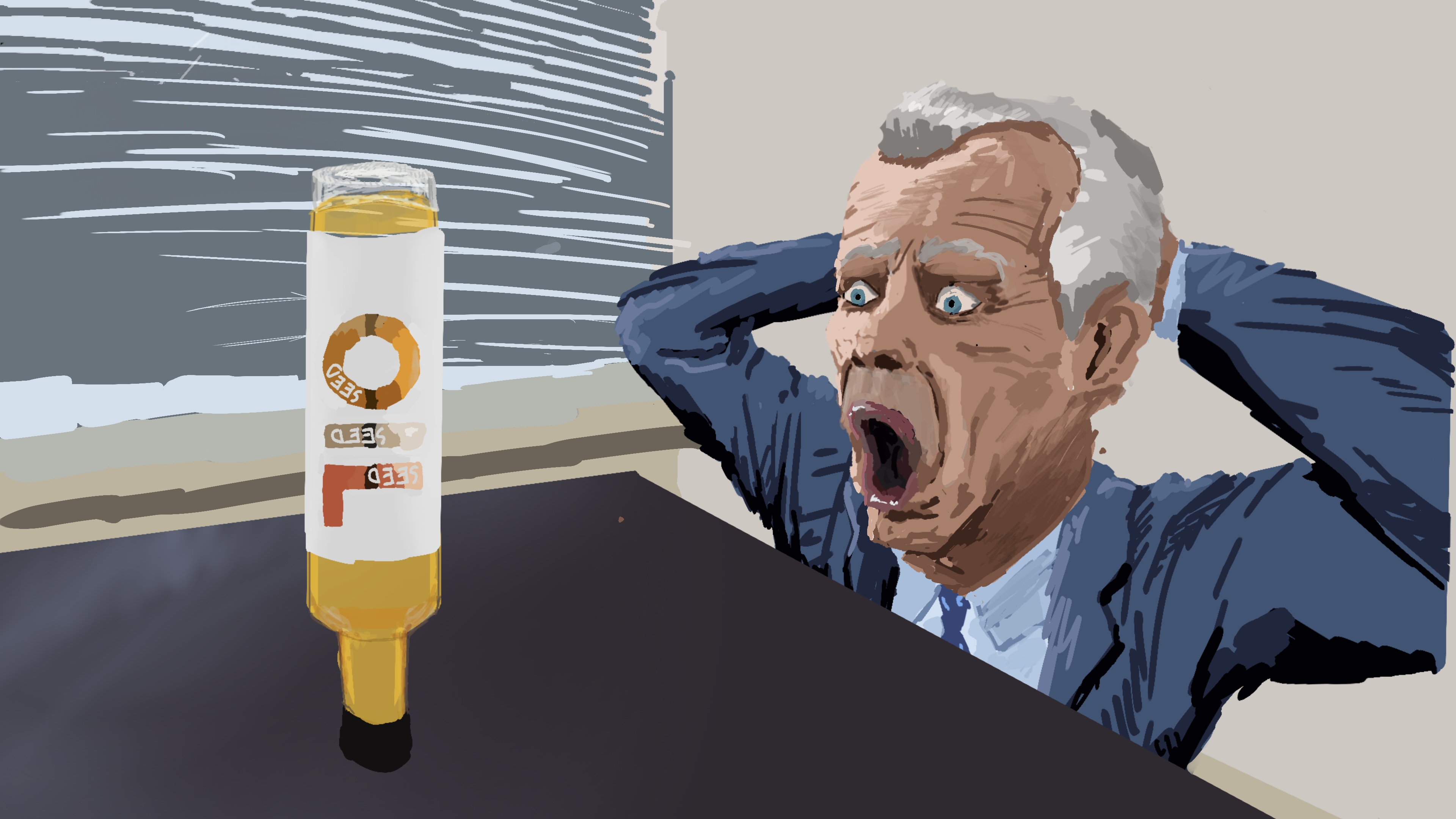
Knowing whether seed oils are healthy or not has become a nigh impossible feat in recent years with health professionals seemingly contradicting each other in every aspect of the matter.
Ever since the United States’ secretary of health and human services, Robet F. Kennedy Jr. was put into office, opinions on seed oils have become more pronounced. The opinions mostly concern themselves about whether seed oils are healthy or not. Kennedy states that you should swap out said oils for animal-based alternatives like lard, beef tallow or butter. His statements, however, are discarded by most health professionals and other historically trustworthy sources like Harvard health and the American Heart Foundation. Nevertheless, I have noticed a lot of people still hold Kennedy’s claims close to heart which made me wonder if their concerns are well founded. Because of this I decided to interview Richard Frank, a seed oil skeptic, to see where his primary concerns lie:
“I'm going to be talking about chemically pressed seed oils because it's the cheapest and what all the restaurants use. When they extract the seed oil they put them under pressure and heat them up at the same time, but there is still some oil left and they want to get as much as possible out, so they use a solvent called hexane which is a dangerous chemical. They say that they control it so that it isn't dangerous, but already then, you’re a little skeptical.
“And then, after they've extracted the oil, it smells like ass, it looks like ass, tastes like ass. So, they must then deodorize it so that it smells, tastes and looks good. Then it’s usually poured into plastic packaging, a hot oil. It's not hot enough for the plastic to melt, but it's still hot oil that goes into the plastic container which draws out microplastics from it. It feels obvious that if you pour something hot into plastic containers, then the plastic will leak out. In addition, these plastic containers aren't the highest quality. They wash the oil with sodium hydroxide which makes it last longer, get a better taste, etc.”
I’ll firstly go over the concern about chemical contamination from primarily hexane and sodium hydroxide. These toxic chemicals are removed in the refinement process, nevertheless there will still be trace amounts left in the seed oil after refinement. There are however, currently not enough studies showing the quantities of hexane and sodium hydroxide residue in seed oils, and those that exist seem to point towards the amounts being negligible. Another problem with hexane is its negative effects on the environment as it is produced from non-renewable fossil fuels (crude oil).
Going over to micro plastics (MP) which a recent study tested for. It showed that there was MPs present in seed oils (with a concentration of 1140 ± 350 MPs/L). Though, other sources are likely to be much higher contributors to your total MP intake. Additionally, there are currently no organizations that regulate the amounts of MPs allowed in foods, and since MP is a relatively recent discovery, there haven’t been enough studies researching a safe consumption amount. The limited research we do have seems to at least indicate that MP exposure is harmful. It is also worth noting that there is no strong evidence pointing towards where specifically in the production process the MPs enter the seed oils. Anyways onto Frank’s next point:
“When you heat up the oil, the polyunsaturated fatty acids (PUFAs) it contains oxidize. So, when you eat your fries or meatballs that you have fried in the seed oil, then this oxidized fat enter your body. This could lead to brain-cell damage, cardiovascular disease, strokes and I've even heard cancer too. This is because a harmful substance called 4-HNE is created when we get this oxidized oil in our bodies. However, regardless of it being hot or cold pressed, it will still oxidize in the body even though the former is worse.
“One of the processes that they use when refining the oil is that they heat it up to a really high temperature. When you heat polyunsaturated fats to high temperatures it easily oxidizes (goes rancid). They say that it doesn't oxidize because it's heated up in a vacuum-packed container but even so it still gets more sensitive to oxidization.”
To summarize, one of his concerns is oxidizing being bad for health, which is true. The oxidative degradation of lipids containing PUFAs (which are highly prevalent in seed oils) does damage cell membrane and create the chemical compounds MLD and 4-HNE. These compounds do have a connection to a breadth of harmful effects, however, enough studies haven’t been done on the matter to truly determine to what extent. (If at all.)
So, the oxidizing of PUFAs in seed oils is harmful for you, but seed oils also contain high amounts of vitamin E which has antioxidating properties. These effects should cancel out each other unless the seed oils are too heavily oxidized, which they may become through extensive exposure to heat, light or oxygen. (One of the reasons that hot-pressed oils are generally seen as an unhealthier option to cold-pressed ones is for that they become more susceptible to oxidization because of their production process.) This is also what Frank’s next concern is about:
“Now let's trust them and say that the seed oil isn't contaminated. There is still the problem of it being stored in a too hot place, or with too much light. It’s not that hot in a store generally, but light is still a problem. In restaurants, I don't think they care about where it is, it can be under a stove or whatever. What I mean is that it can quite easily get oxidized, so, it's a bit sketchy. Yes, the oil could have been produced well, but you don't know how it gets treated when it's transported or stored.”
This is one of the reasons why it’s so hard to know whether the oxidation is a problem or not, it’s situation specific. That is in addition to us knowing too little about it. However, we have done a decent amount of large long-term studies putting seed oils against animal-based fats. In these studies, there has generally been a consensus that seed oils are healthier than animal fats which increased mortality rates in test groups compared to seed oils. So maybe it’s one of those situations where you have to choose the lesser of two evils. And that is if seed oils even are bad for you, no studies I could find ever confirmed seed oils to be unhealthy.
The biggest problem in the argument about whether seed oils are bad for you or not is that both sides are essentially blind. A lack of information has been a consistent problem in answering most of Richard’s concerns, we need more studies. The best we can do is to go with the studies we do have, and in those, seed oils seem to be the healthier option (with an emphasis on “seem to be”). If you have got the funds you could try to buy cold pressed seed oils, however it’s not like going for the hot-pressed ones is going to kill you, or the butter for that matter. Or maybe you should stop pondering on this debate and just grab the damn olive oil; never seen anyone complain about that one.
References: (1) The British Heart Foundation (BHF), (2) The Polish Journal of Food and Nutrition Sciences (PJFNS), (3) BBC Food, (4) The European Food Information Council (EUFIC), (5) PubMed, (6) PubMed, (7) PubMed, (8) Stanford Medicine News Center, (9) ScienceDirect, (10) The European Food Information Council (EUFIC), (11) The Australian Department of Climate Change, Energy, the Environment and Water (DCCEEW).
Writers
Photo
As contributors to Mobile Stories, we adhere to its editorial guidelines. This involves verifying our sources, ensuring we don't violate any copyrights, and following the Young Reporter's Code of Ethics. Find out more about Mobile Stories. Read more about the Young Reporter's Code of Ethics.
 07 Sep |
 10 Jun Pupil |
 01 Jun Pupil |
 01 Jun Pupil |
 01 Jun Pupil |
 01 Jun Pupil |
 01 Jun Pupil |
 01 Jun Pupil |
 01 Jun Pupil |
 31 May Pupil |
 31 May Pupil |
|
31 May Pupil |
 31 May Pupil |
 31 May Pupil |
 31 May Pupil |
 31 May Pupil |
 31 May Pupil |
 31 May Pupil |
 31 May Pupil |
 28 May Pupil |
|
19 May Pupil |
|
19 May Pupil |
 19 May Pupil |
 19 May Pupil |
 19 May Pupil |
 19 May Pupil |
 19 May Pupil |
 19 May Pupil |
 08 May Pupil |
 08 May Pupil |
 18 Apr Pupil |
|
07 Sep Pupil |
|
10 Jun Pupil |
|
01 Jun Pupil |
|
01 Jun Pupil |
|
01 Jun Pupil |
 01 Jun |
 01 Jun |
 01 Jun |
 31 May |
 22 May |
|
31 May Pupil |
|
31 May Pupil |
|
31 May Pupil |
|
31 May Pupil |
|
28 May Pupil |
|
19 May Pupil |
|
19 May Pupil |
|
19 May Pupil |
 |
 |