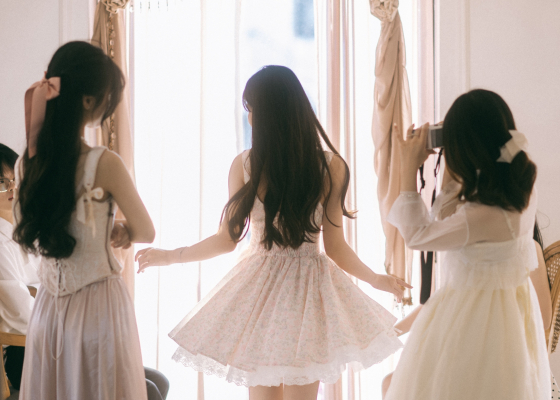
What's popular today is changing faster than ever. A shirt, room decor or even your diet, that was popular last week, is out of fashion next week. This phenomenon is what we know as microtrends.
There is no specific or single origin of microtrends, but they clearly trace back to the social media explosion of late 2010’s. During the rise of media platforms like TikTok and Instagram, short trends started escabeche, in the beginning mostly linked to smaller communities, a specific style or a city for example. At the same time online ultra-fast-fashion companies like Shein or Temu started taking place. These companies produce clothes at very low costs, leading to the clothes being of bad quality and not lasting long. This short cycle leads to a lot of shipping over the world due to the companies trying to find the cheapest places for each step in the making of clothes, and a lot of clothing waste. Both these factors causes great harm on the environment.
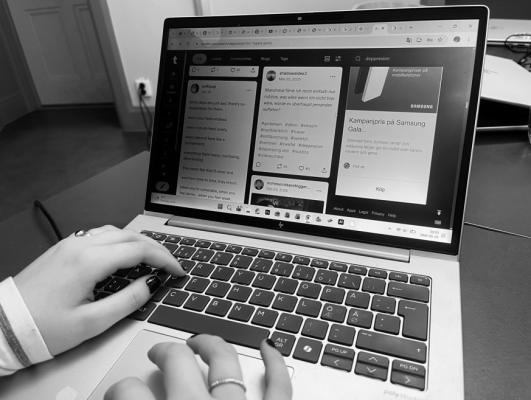
These brands were one of the firsts to market by sending influencers free clothes in exchange for them posting “hauls”. This new, extremely cheap and effective way of marketing, combined with covid19 creating an inability to shop in person, increased the sales of these brands. The ultra-fast fashion brands showing people a new way of shopping, cheap and short-lasting, has been a great influence on the microtrend phenomenon. And still today influencers on TikTok and Instagram are constantly getting sent PR from brands and are therefore showing up their new clothes every week. They are getting paid to do this, but it is not always clear to tell if an influencers video is an ad or an unsponsored post.
As a user of these apps, it is easy to feel the need to also need to shop that much. The videos make us believe that it is normal to buy new clothes constantly. Teenagers are more likely to be influenced by this since they are the people using social media the most. Spending most of your allowance on clothes every month has been normalized. We interviewed 6 teenagers and young adults and most of them said that they spend a lot of money on fashion. When we asked if they tend to jump on trends. Lea-li who describes her style as basic but still wearing what she likes, said that she never wants to stand out or have last season’s clothes since it makes her feel left out. She says that she often follow trends to fit in at school.
But despite the pressure from content online most of the people we spoke to said that their focus was on developing their own style and wearing what they like, rather than following trends. Some of them even try to actively resist the cycle. “I only buy clothes so I barely make it” says Robin, a teenager who describes his style as basic alternative. He notes that he mostly shops second-hand and that he hasn’t bought a pair of jeans for five months. However, even if he tries to avoid buying things that would stop being trendy fast, he still notices the pressure around him. Robin mentions a friend who is a constant “trend hopper”, jumping from buying a smitski to drinking matcha, only to get tired shortly after.
Charlie, whose style falls between goth and emo, has found several ways to find clothes that match what she likes. She watches Pinterest, for inspiration, trying to find a piece of clothing she likes. Then she paints, sews or puts on spikes to turn her vision into reality. But Charlie still understands why so many people follow trends. “I think everyone one way or another jumps on the trends because you’re so surrounded of them” She says.
Even if the people we spoke to were aware of how fast trends changes, they all claimed to be up to trend when we asked about their style. This shows that even if they have their own style, it is never items of clothing that were popular years ago. Five out of six told us they prefer to shop second-hand since you can find more unique items. Buying second-hand is great, but in one way this is also a form of trend. It Is popular right now to have niche brands and vintage items, and the type of brands tend to fluctuate too.
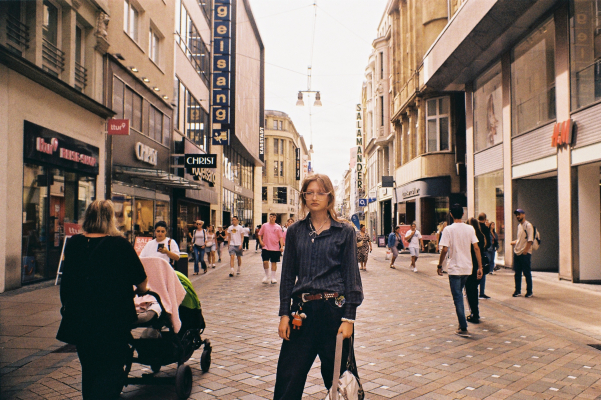
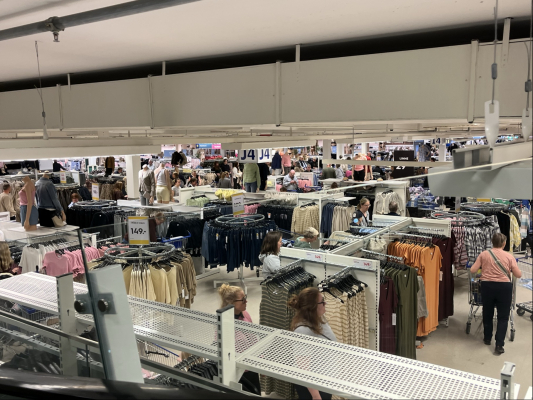
We took a walk on Stockholm’s largest shopping street; Drottninggatan. In stores like Nelly, Gina Tricot, H&M, Lindex and many more we saw a clear pattern of what’s trending currently. Lots of turquoise, coral, ruffles on skirts and tops and mini jeanskirts. All the largest stores carried the same types of clothes. It would be impossible to tell where you bought something since they all have the same stuff. This is a sign that these brands are becoming increasingly similar to fast fashion brands. Shein and Temu’s rapid expansion has put pressure on the brands that used to be the fastest on jumping on trends. H&M and Zara growth exploded in the 90’s when they started producing clothes mor rapidly than any other company, offering hundreds of new items every week. But today that is nothing compared to Shein that churns out up to 10 000 new items every week. This new pressure on the brands has made them start to adapt to this new speed by using similar producing methods, shipping the clothes around the globe for each step.
What began as a shift in social media platforms has today fully transformed the cycle of fashion for young people. Today companies’ goals are not to help teenagers express themselves. Instead companies have found a way to reach maximum profits by making everyone want the same wardrobe, a wardrobe that is being replaced again and again faster than ever. But even if the companies are making it hard to go against the grain, young people are trying. The people we spoke to are all critical of trends changing so fast. Young people have an ich to express themselves, and not anyone else. Hopefully, by resisting to follow the given path, and finding our own ways like shopping second hand or upcycling clothes yourself, we can rewrite the rules of fashion.